
Have you been injured in an accident and are unsure about the next steps to take? Navigating the process of filing a claim can be overwhelming, especially when dealing with the aftermath of an accident.
Understanding the personal injury claim process is crucial for securing the compensation you deserve. This guide is designed to walk you through the necessary steps to file an accident injury claim, breaking down the complexities into manageable parts.
Key Takeaways
Table of Contents
- Understanding the personal injury claim process is essential.
- Knowing the steps to file a claim can help you navigate the system.
- Securing fair compensation requires a thorough understanding of the claims process.
- A well-documented claim can significantly impact the outcome.
- Seeking professional guidance can be beneficial.
Understanding Accident Injury Claims
Accident injury claims are a legal process that allows individuals to seek compensation for damages incurred due to another’s negligence. Understanding the intricacies of these claims is essential for navigating the legal landscape effectively.
Types of Accidents That Qualify for Claims
Various types of accidents can lead to valid claims, including road accidents, workplace incidents, slips, and falls. Road accidents often involve complex insurance claims, while workplace incidents may require navigating workers’ compensation laws.
| Type of Accident | Common Causes | Potential Compensation |
|---|---|---|
| Road Accidents | Reckless driving, speeding | Medical expenses, lost wages |
| Workplace Incidents | Equipment failure, negligence | Medical expenses, rehabilitation costs |
| Slips and Falls | Poor maintenance, hazardous conditions | Medical expenses, pain and suffering |
Common Injuries That Merit Compensation
Common injuries that merit compensation range from minor to severe and include physical as well as psychological trauma. Injuries such as whiplash, broken bones, and head trauma are frequently claimed.
Time Limitations for Filing Claims
It’s crucial to be aware of the time limitations for filing claims, as these can vary significantly by jurisdiction. Generally, the statute of limitations ranges from one to three years depending on the location and type of claim.
The Importance of Acting Quickly
Acting quickly is crucial not only to meet the statute of limitations but also to ensure that evidence is preserved and witness testimonies remain reliable. Prompt action can significantly impact the success of your claim.
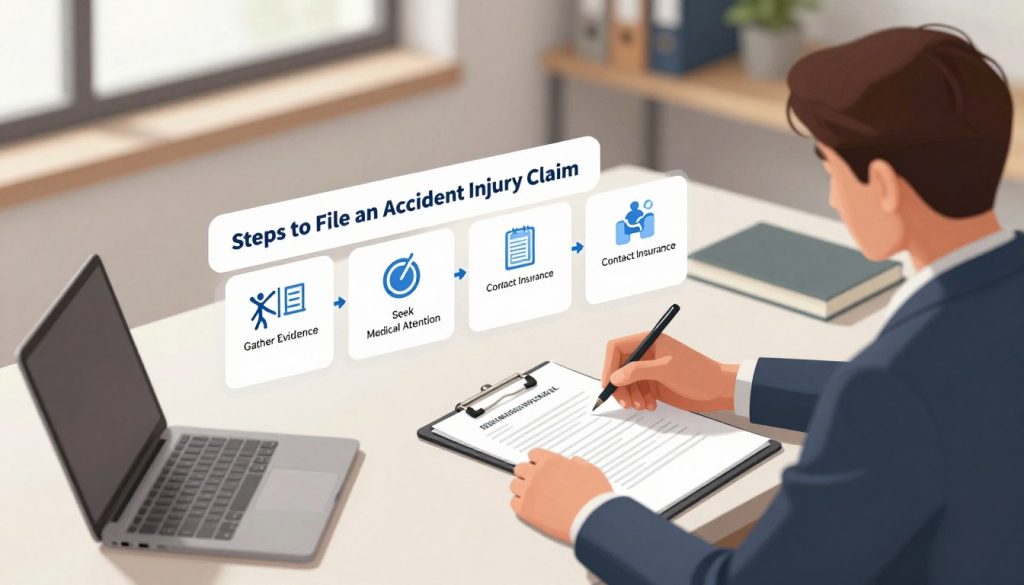
Immediate Steps After an Accident
The immediate actions following an accident are crucial for both your health and the success of your injury claim. It’s essential to prioritize your well-being while also taking steps to protect your legal rights.
Seeking Medical Attention First
Your health is the top priority after an accident. Seeking medical attention immediately not only ensures your well-being but also creates a medical record that can serve as vital evidence for your claim. Even if your injuries seem minor, it’s crucial to get a professional medical assessment.
Documenting the Accident Scene
When it’s safe to do so, documenting the accident scene can provide valuable evidence. Take photos of the scene, including any damage to vehicles or property, and note any environmental factors that could have contributed to the accident.
Gathering Witness Information
If there are witnesses, gathering their information can be crucial. Witness statements can help corroborate your account of the accident, strengthening your claim.
Reporting the Accident to Authorities
Reporting the accident to the relevant authorities is a critical step. This not only creates an official record of the incident but also helps in establishing the facts of what happened.
Preserving Evidence for Your Claim
Preserving evidence related to the accident and your injuries is vital. This includes keeping records of medical treatment, repair estimates for damaged property, and any correspondence related to the incident.
By following these immediate steps after an accident, you can significantly improve the chances of a successful injury claim. It’s about being prepared and taking proactive measures to support your claim.
How to Start an Accident Injury Claim: Step-by-Step Process
Navigating the process of filing an accident injury claim requires a clear understanding of the necessary steps and legal considerations. To ensure a successful claim, it’s crucial to follow a structured approach that covers all critical aspects.
Consulting with a Personal Injury Attorney
The first step in starting your accident injury claim is consulting with a personal injury attorney. An experienced attorney can provide expert guidance tailored to your case, helping you understand your rights and the potential outcomes. They can also assist in gathering evidence and building a strong case.
Filing the Initial Claim with Insurance Companies
Filing the initial claim with insurance companies requires careful preparation. It’s essential to gather all necessary documentation, including medical records and accident reports, to support your claim. Your attorney can help you navigate this process and ensure that your claim is filed correctly and on time.
Preparing and Submitting Required Documentation
Preparing and submitting the required documentation is a critical step in the claim process. This includes medical bills, lost wage statements, and any other relevant evidence. Ensuring that your documentation is thorough and accurate can significantly impact the success of your claim.
Understanding the Role of Demand Letters
A demand letter is a formal document that outlines your claim and the compensation you are seeking. It’s typically sent to the insurance company after you have gathered all necessary documentation. Understanding the role of demand letters and how they fit into the claim process is vital for negotiating a fair settlement.
Calculating Your Damages and Compensation
Calculating your damages and compensation accurately is crucial for a successful claim. This involves assessing both economic damages, such as medical expenses and lost wages, and non-economic damages, like pain and suffering. Your attorney can help you determine a fair and comprehensive compensation amount.
| Step | Description | Importance |
|---|---|---|
| Consulting with a Personal Injury Attorney | Expert guidance and case building | High |
| Filing the Initial Claim | Submitting the claim to insurance companies | High |
| Preparing and Submitting Documentation | Gathering and submitting necessary evidence | High |
| Understanding Demand Letters | Formal document outlining the claim and compensation | Medium |
| Calculating Damages and Compensation | Assessing economic and non-economic damages | High |
By following these steps and working with a personal injury attorney, you can navigate the accident injury claim process more effectively and increase your chances of a successful outcome.
Navigating the Claim Process
The journey through the personal injury claim process requires patience, persistence, and a clear understanding of what to expect. As you navigate this complex process, you’ll encounter various stages, from initial interactions with insurance adjusters to potential settlement negotiations.
Dealing with Insurance Adjusters
Insurance adjusters play a crucial role in the personal injury claim process. Their primary goal is to minimize the payout, so it’s essential to be prepared when interacting with them. Be cautious with your statements, as they can be used to reduce your claim’s value. It’s advisable to consult with a personal injury attorney before making any significant statements.
Common Challenges and How to Overcome Them
Claimants often face challenges such as delayed processing, disputed claims, or low settlement offers. To overcome these, document everything related to your claim, including medical records, correspondence with insurance companies, and any other relevant evidence. Persistence and the right legal guidance can significantly impact the outcome.

Settlement Negotiations: What to Expect
Settlement negotiations are a critical phase of the injury claim settlement process. This is where your attorney will negotiate with the insurance company to reach a fair settlement. Understanding the value of your claim is crucial, and an experienced attorney can provide guidance on this.
When Litigation Becomes Necessary
If settlement negotiations fail to yield a satisfactory outcome, litigation may become necessary. This involves taking your claim to court, where a judge or jury will determine the outcome. While litigation can be lengthy and complex, it’s sometimes the best way to secure fair compensation.
Timeline Expectations for Resolution
The timeline for resolving a personal injury claim can vary significantly. Factors such as the complexity of the case, the insurance company’s responsiveness, and whether litigation is required all impact the duration. Generally, claims can be resolved anywhere from a few months to several years.
| Stage | Average Duration | Description |
|---|---|---|
| Initial Claim Filing | 1-3 months | The process begins with filing a claim with the insurance company. |
| Settlement Negotiations | 3-6 months | Negotiations with the insurance company to reach a settlement. |
| Litigation | 6 months to 2 years | If negotiations fail, the claim may proceed to litigation. |
Understanding these stages and their associated timelines can help manage your expectations and prepare you for the journey ahead in the personal injury claim process.
Conclusion
By understanding the best practices for filing an injury claim, you can significantly enhance your chances of securing fair accident injury compensation. The process involves several critical steps, from documenting the accident scene to negotiating with insurance adjusters.
To ensure a successful claim, it’s essential to act quickly, as time limitations for filing claims can vary. Consulting with a personal injury attorney can provide valuable guidance and support throughout the process.
By following the guidelines outlined in this article, you’re better equipped to navigate the complexities of accident injury claims and achieve a favorable outcome. Remember, thorough preparation and professional advice are key to maximizing your compensation.